Stop Apologizing for Your Game Library: The Case for Playing Whatever the Heck You Want

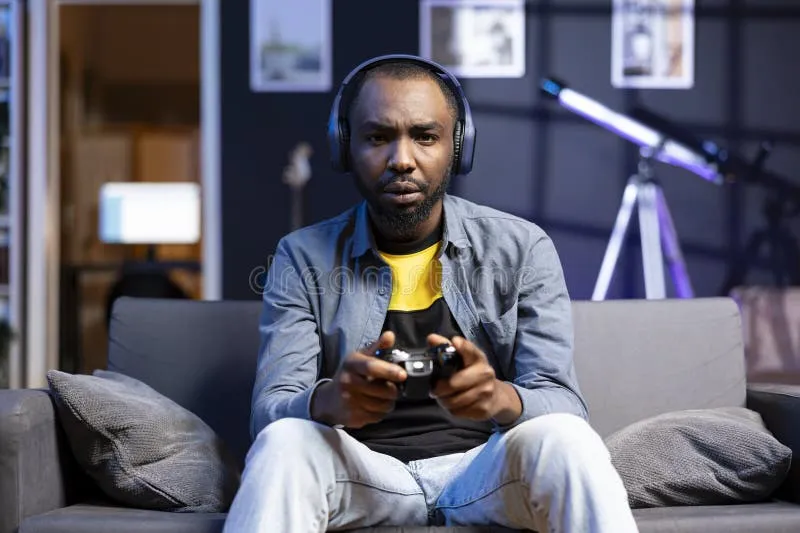
Photo: person happily playing mobile phone game smiling relaxed, via img.freepik.com
Let's set the scene. You're at a cookout, paper plate of potato salad in hand, and someone asks what games you've been playing lately. You open your mouth to say Stardew Valley or Two Dots or, heaven forbid, Candy Crush Saga — and then you stop. You do a quick social risk assessment. You pivot. "Oh, you know, just some stuff." You change the subject to literally anything else.
Sound familiar? Yeah. You're not alone.
There's a deeply embedded, totally unspoken pecking order in gaming culture, and it has been quietly making people feel bad about their own hobbies for years. At the top of the mountain sit the prestige titles — the sprawling RPGs, the brutal soulslike games, the competitive shooters with six-figure esports prize pools. And somewhere down at the bottom, apparently, sit the games that millions of Americans play every single day without a shred of shame — until someone else makes them feel like they should have some.
It's time to talk about gaming guilt, why it exists, and why it is, frankly, ridiculous.
The Invisible Scoreboard Nobody Asked For
Gaming has always had a bit of a gatekeeping problem. In the early days, it was about whether you were a "real" gamer at all — a label that got weaponized in ways that were, to put it politely, not great. As the culture matured, the gatekeeping got more nuanced. Now it's less about whether you game and more about what you play.
Mobile games? Casual. Puzzle games? Baby stuff. Visual novels? Not even real games, apparently, according to some guy on Reddit who has very strong opinions about input mechanics. Single-player story games? Lonely and soft. Cozy games? Adorable, sure, but serious gamers don't have time for that.
The result is a bizarre cultural math where a game's legitimacy seems to be measured by how punishing it is, how many hours it demands, or how loudly it lets you yell into a headset at strangers. Enjoyment, weirdly, barely factors in.
Psychologists who study leisure behavior have a term for this kind of social judgment: taste policing. It shows up in music, film, food — basically anywhere humans gather and form identities around what they consume. Gaming is no different. We use our hobby choices to signal who we are, and when someone else's choices don't match our signal, the instinct is sometimes to dismiss them.
But here's the thing: that instinct is a them problem, not a you problem.
"I Delete My Apps Before Friends See My Phone"
Talk to enough players and the stories start to blur together in a way that's equal parts funny and kind of sad.
There's the 34-year-old software engineer who religiously plays a match-three puzzle game on his lunch break but refers to it as "just something dumb I do" whenever it comes up — even though it's genuinely the most relaxing part of his day. There's the college student who loves farming sims but won't bring them up in her gaming friend group because she's tired of the "oh, that's cute" response. And then there's the guy — and there's always a guy — who deleted his Solitaire app before letting a friend borrow his phone because he didn't want to explain himself.
These aren't edge cases. They're the norm. Millions of people are quietly enjoying games they feel vaguely embarrassed about, which is one of the stranger social phenomena of modern life when you really sit with it.
Game developers have noticed. Indie studios that make cozy, casual, or narrative-focused games often talk about the disconnect between their games' massive player bases and the cultural conversation around gaming, which frequently ignores them entirely. Players are there — in enormous numbers — but they're often playing in silence, without the community validation that comes with being part of a "serious" genre.
The Psychology of Play Doesn't Care About Your Genre Preferences
Here's where things get interesting, and where the case for playing whatever you want gets genuinely bulletproof.
Play, at its core, is about engagement, challenge calibrated to the player's current state, and reward. Those elements don't require a 4K cutscene or a skill rating system. They exist in a two-minute mobile puzzle just as authentically as they exist in a hundred-hour action RPG. The neurological experience of solving a satisfying puzzle — that little dopamine hit, that sense of completion — doesn't check what platform you're on first.
Researchers who study the psychology of games consistently find that the benefits people get from gaming — stress relief, a sense of accomplishment, creative stimulation, social connection — are tied to how well a game fits a person's needs in the moment, not to some objective quality ranking. A person who needs twenty minutes of low-stakes, meditative distraction after a brutal workday is getting exactly what they need from a casual puzzle game. The fact that someone else might find that boring is completely irrelevant to their experience.
Fun, it turns out, is personal. Revolutionary concept.
The Gatekeeping Tax
There's also a real cost to gaming snobbery that doesn't get talked about enough: it actively shrinks the community.
When casual or mobile players feel unwelcome in gaming spaces, they don't suddenly start playing Dark Souls. They just opt out of the conversation entirely. They keep playing their games — because again, those games are enormously popular — but they stop identifying as gamers, stop engaging with gaming culture, and stop contributing to a community that could genuinely use their perspectives.
The gaming world is more diverse than the loudest voices in it often suggest. People play games on phones during commutes, on tablets while watching TV, on consoles in short bursts between kids' bedtimes. They play games that make them laugh, games that let them relax, games that tell them stories without requiring them to master a complex combat system. All of that is valid. All of it is gaming.
The idea that there's one right way to engage with interactive entertainment is not only wrong — it's actively bad for the medium. Some of the most creative, emotionally resonant experiences in games right now are coming from exactly the genres that get dismissed as low-brow. Narrative mobile games, cozy sims, casual puzzle titles — these spaces are doing genuinely interesting things, and they're doing it for audiences that hardcore gaming culture often ignores.
Reclaiming the Joy
So what's the move? Honestly, it's pretty simple: play your games and stop apologizing.
Keep the match-three on your home screen. Tell people you've been playing a farming sim and let the "oh, that's cute" crowd do their thing while you harvest virtual turnips in peace. Recommend your favorite mobile puzzle game to a friend without the disclaimer that it's "just something dumb."
Because here's the truth that gaming culture occasionally forgets: the whole point of games is to have fun. Not to prove something. Not to earn a credibility badge. Not to demonstrate your commitment to a particular aesthetic of difficulty or complexity. Just to have fun.
At FreSpinn, we believe pretty firmly that the best game is the one you're actually enjoying right now — whether that's a sprawling fantasy epic or a five-minute spin of something bright and silly on your phone. The only metric that genuinely matters is whether you're having a good time.
So spin into whatever brings you joy. Delete nothing. Apologize to no one.