Side Quest Legends: The Wildest Gaming Spinoffs That Had No Right to Be This Good
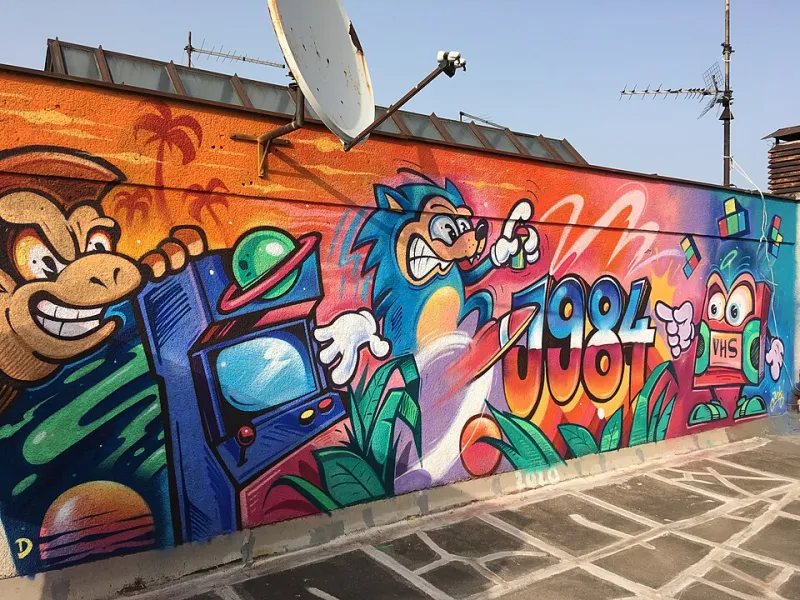
Photo: Tunic Youth, CC BY-SA 4.0, via Wikimedia Commons
Imagine you're a beloved video game franchise. You've got a loyal fanbase, a signature gameplay loop, maybe a mascot with an iconic hat. Life is good. And then some executive somewhere leans across a conference table and says, "What if we made a completely different kind of game with your name on it?"
This is the moment where spinoffs are born. Some of them are cautious little extensions — same vibe, slightly different setting, perfectly fine. But the ones we're here to celebrate today? Those are the ones where the developers clearly threw the original franchise rulebook out a window, replaced it with pure chaos energy, and somehow produced something genuinely incredible.
Buckle up. We're going on a side quest.
What Even Is a Spinoff, Technically?
Before we start handing out trophies, let's get our definitions straight, because the gaming world uses "spinoff" pretty loosely.
A spinoff, in the strictest sense, is a game that borrows a franchise's characters, world, or IP but departs significantly from the original's genre, tone, or gameplay mechanics. It's not a sequel. It's not a prequel. It's more like... a cousin who showed up at Thanksgiving wearing a completely different outfit than everyone else and somehow became the most interesting person at the table.
The key thing that separates a spinoff from a disaster is intentionality. When a studio takes a beloved property and deliberately pivots — changing the genre, flipping the perspective, or chasing a completely different audience — they're making a creative bet. Sometimes it's a calculated one. Sometimes it feels like someone lost a dare. But when it works? It really works.
The Holy Trinity of Spinoff Success
Not all spinoffs are created equal, and the ones that actually land tend to share a few key ingredients.
First: They respect the source material without being strangled by it. The best spinoffs carry the soul of the original — the characters, the world, the emotional tone — without forcing themselves into a genre that doesn't fit. They borrow what's meaningful and build something new around it.
Second: They commit completely. Half-measures kill spinoffs. The games that work are the ones where the developers clearly believed in what they were making, even when the concept sounded absolutely unhinged in a pitch meeting. You can feel the conviction in the final product.
Third: They find their own audience. The smartest spinoffs aren't trying to replace the main franchise — they're trying to bring in people who might not have been interested in the original. A strategy game set in an action franchise's universe. A rhythm game built around a fighting game's soundtrack. A cooking game starring characters from a dungeon crawler. (That last one is real, by the way, and it rules.)
Spinoffs That Belonged in a Museum
Let's talk specifics, because the history of gaming is absolutely littered with spinoffs that deserve their flowers.
The Pokémon franchise is basically a spinoff factory at this point, and the results range from "this was obviously going to work" to "who greenlit this and can I shake their hand?" Pokémon Snap — the original N64 version — is a perfect example of the latter. A first-person on-rails photography game set in the Pokémon world? On paper, that's a strange pitch. In practice, it became one of the most beloved games of its era and recently got a sequel that reminded everyone why the concept was genius all along.
Then there's the Fire Emblem franchise, which took its tactical strategy DNA and spun it into Tokyo Mirage Sessions ♯FE — a JRPG about Japanese pop idols fighting demons in a Tokyo that bleeds into a mirror dimension. The connection to the original Fire Emblem is... present, but it requires some squinting. What isn't in question is that the game is an absolute blast, and it found a devoted audience who might never have touched a traditional strategy game in their lives.
And we simply cannot have this conversation without mentioning Hyrule Warriors, which took the Legend of Zelda's iconic setting and characters and dropped them wholesale into the Dynasty Warriors hack-and-slash formula. On paper: chaotic. In practice: deeply satisfying in a way that scratches an itch neither franchise could scratch alone. Watching Link mow through literal thousands of enemies while Zelda music plays is a specific kind of joy that shouldn't work as well as it does.
The Beautiful Disasters (We Love Them Anyway)
Of course, not every spinoff lands, and the ones that don't can be spectacularly entertaining in their own right.
There's a particular flavor of spinoff failure that comes from a franchise trying to chase a trend that was already on its way out. The mid-2000s were full of beloved gaming characters getting shoved into kart racers, music games, and party titles with the energy of a parent trying to use slang they just learned. Some of these were fine. Some were deeply, fascinatingly not fine. All of them are now nostalgia objects that people pull up on YouTube at midnight with a kind of fond bewilderment.
The failures matter, by the way. They're proof that studios are actually swinging. A gaming landscape where every spinoff is a safe, market-tested, focus-grouped non-event would be technically less embarrassing but infinitely more boring. The swings-and-misses are part of what makes the genuine surprises feel so good.
Underrated Spinoffs That Deserve a Second Look
If you've never explored the spinoff section of a franchise you love, here's your sign. Some genuinely underappreciated gems are sitting there waiting.
Luigi's Mansion took the sidekick of the biggest gaming franchise on earth and gave him his own horror-comedy adventure with a vacuum cleaner. It was weird. It was charming. It spawned two sequels and a devoted fanbase that will argue passionately that Luigi is, in fact, the better brother.
Theatrhythm Final Fantasy turned one of gaming's most beloved musical catalogs into a rhythm game that made grown adults cry on the bus because they forgot how much the Final Fantasy VII battle theme meant to them. It was a love letter disguised as a spinoff.
And Cadence of Hyrule, which fused the Legend of Zelda world with the rhythm-based mechanics of Crypt of the NecroDancer, is one of the most creative crossover experiments in recent gaming history — a game that asked "what if you had to move to the beat to survive?" and answered that question with a resounding, musical yes.
Why Spinoffs Matter for the Future of Gaming
Here's the bigger picture: spinoffs are one of gaming's most underappreciated creative engines.
They give studios permission to experiment without betting the whole franchise on it. They allow beloved characters and worlds to reach audiences who would never pick up the main series. They generate the kind of creative cross-pollination — action meets strategy, horror meets comedy, rhythm meets dungeon crawling — that pushes the medium forward in ways that safe sequels simply can't.
At FreSpinn, we're big believers in the side quest. Sometimes the detour is where the real adventure is. The off-the-beaten-path, "we probably shouldn't do this but we're doing it anyway" energy that produces the best spinoffs is the same energy that keeps gaming genuinely exciting.
So here's to the chaotic pivots, the unexpected genre leaps, and the spinoffs that had absolutely no business being as good as they were. May there be many more.